Bwindi Impenetrable National Park in Uganda — 321 km² of ancient montane rainforest in south-western Uganda, UNESCO World Heritage Site, home to 459 mountain gorillas — is also a village, a boda boda route, an orphanage courtyard, and a construction site. During visits across January and June 2026, spending a total of six days in Buhoma and the surrounding area at GPS coordinates -0.9650°N, 29.6144°E, what became clear is that the park and the community around it are not separate things. They are the same place, experienced from different angles.
In January 2026, at the orphanage run by Nicholas in Buhoma, two teenagers in pink and red T-shirts stood in the sandy courtyard in front of the building and posed for a photograph — self-consciously and with genuine enjoyment. The other children gathered around to watch. Smartphones are not common in Buhoma; for most of the young people at the orphanage, being photographed on a camera is a notable event. The image that resulted is one of the most straightforwardly joyful photographs from the whole visit: two people performing a version of themselves for a camera, knowing that the image exists and wanting to be seen. That kind of access to photography is something most of these teenagers do not routinely have. It costs nothing, it takes two seconds, and the response makes the moment worth documenting.
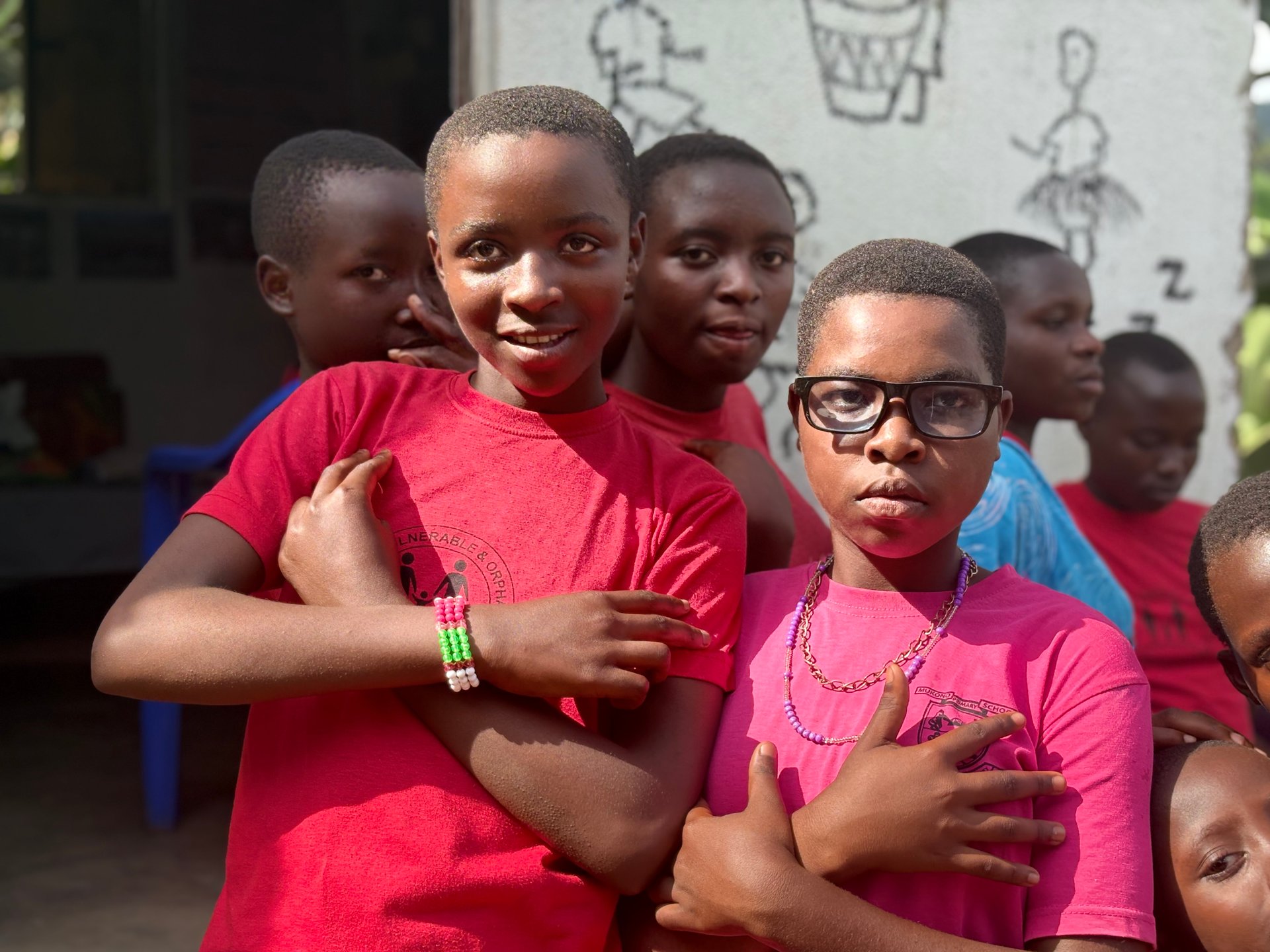
This is the texture of Buhoma in Kanungu District — the village that sits at the northern entrance to Bwindi Impenetrable National Park. It is a place that exists in close proximity to one of the world's most significant wildlife conservation successes — the recovery of the mountain gorilla population from approximately 300 individuals in the late 1990s to 459 confirmed in the 2018–2020 census (Uganda Wildlife Authority) — and it is simultaneously a place with an orphanage, a dusty main street, a hospital founded by a German doctor, and a set of community organisations trying to build something durable from the economic base that gorilla tourism provides.
Bwindi Impenetrable National Park Uganda — Key Facts
- Official name
- Bwindi Impenetrable National Park
- Country
- Uganda, south-western region, Albertine Rift
- Area
- 321 km²
- Gazetted
- 1991
- UNESCO World Heritage
- 1994
- Mountain gorillas
- 459 (2018–2020 census, UWA)
- Share of global total
- Approximately half
- Trekking sectors
- Buhoma, Ruhija, Rushaga, Nkuringo
- Gorilla permit (foreign)
- $800 per person (UWA, 2026)
- Managed by
- Uganda Wildlife Authority (UWA)
Ride 4 a Woman: Mountain Biking and Women's Training in Buhoma
One of the community tourism organisations operating in Buhoma is Ride 4 a Woman, founded in 2009. The organisation runs guided mountain bike tours in and around the Bwindi area — a physically distinctive way to experience the landscape of ridgelines, banana plantations, and village tracks that surround the park. Revenue from the tours funds vocational training and education programmes for women in the Buhoma community.
Ride 4 a Woman represents a model of community tourism that is distinct from the primary gorilla trekking economy: it does not depend on UWA permits, it does not require the same degree of advance booking, and it is physically accessible to visitors who want to spend time in the village environment rather than in the forest interior. Mountain biking around Buhoma means riding through the working landscape that borders the park — the farms, the schools, the market areas — giving a ground-level view of the community that a gorilla trek, by definition, does not provide.
The organisation's model also demonstrates one of the structural features of community tourism at Bwindi Impenetrable National Park in Uganda: the most durable community-benefit mechanisms are the ones that convert tourist traffic directly into local wages and training, rather than routing all revenue through a single institution. Ride 4 a Woman, the community rest camps, the porterage cooperatives, the craft markets, and the community walk programmes around the Batwa heritage sites are all versions of the same principle: the gorilla trekking visitor arrives with a budget, and the community's economic infrastructure should be diverse enough to absorb as much of that budget as possible at the local level.
The Batwa: Uganda's Indigenous Forest People at Bwindi
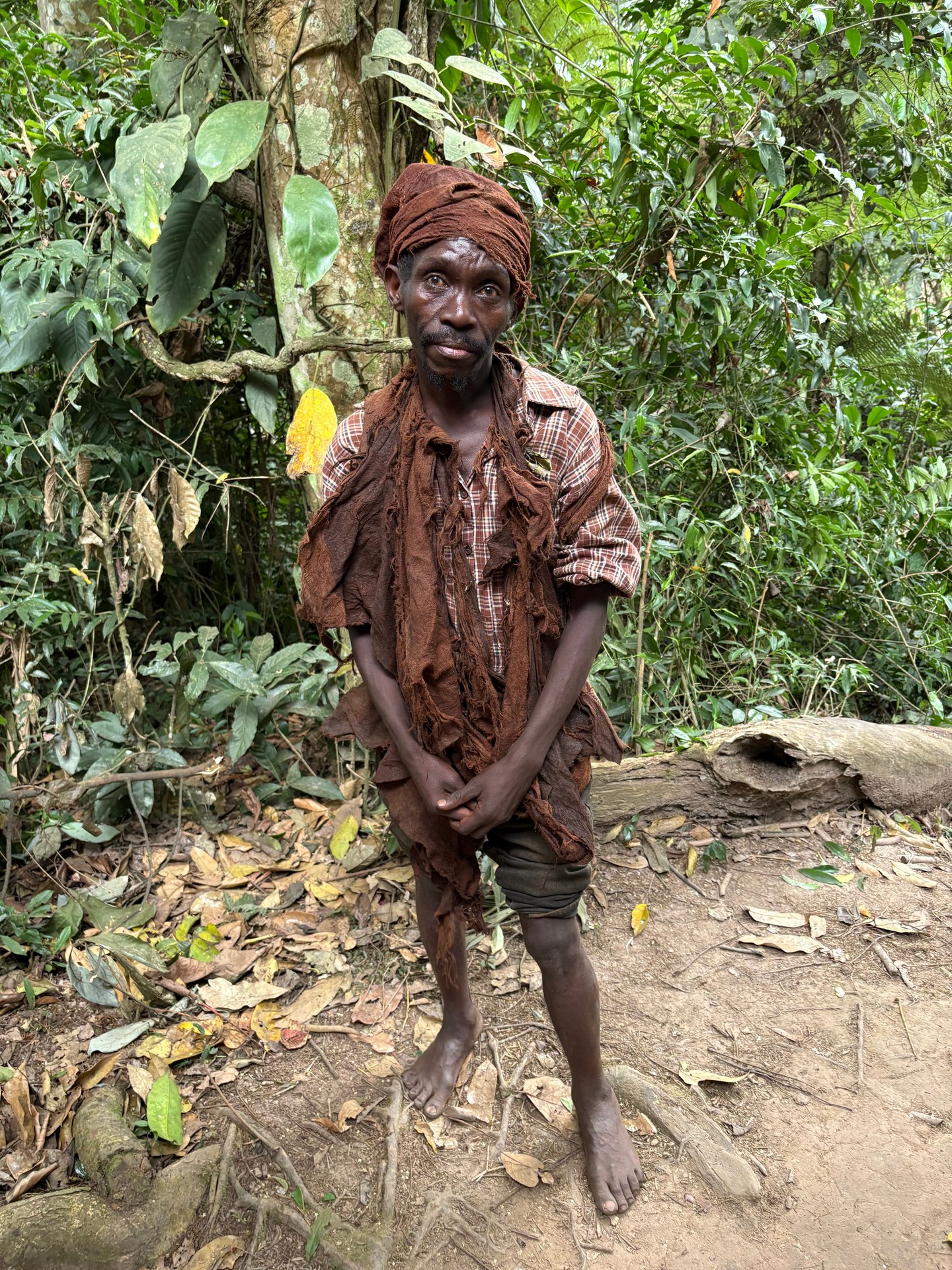
The Batwa are the indigenous inhabitants of the Bwindi forest region, historically living within the forest as hunters and gatherers for generations before the park was gazetted in 1991. When Bwindi Impenetrable National Park was formally established, the Batwa were resettled outside the park boundary — losing access to the forest that had been the foundation of their way of life. In January 2026, we visited a Batwa community near Buhoma during a community walk organised through the sector headquarters. The visit involved meeting community members, hearing about the history of the Batwa's relationship with the forest, and seeing traditional practices demonstrated by community elders. The Batwa man we met stood in front of his mud-brick house in simple, practical clothing — a portrait of what subsistence life at the forest edge looks like, three decades after the forest itself became inaccessible to him as a daily resource.
Several organisations work specifically on Batwa inclusion in the Bwindi area: the Bwindi Batwa Development Association operates locally, and the Nkuringo Conservation and Development Foundation has programmes focused on Batwa rights and sustainable livelihoods. The Bwindi Mgahinga Conservation Trust, funded in part by gorilla trekking revenues, has directed resources toward Batwa community welfare through its grant-making programme since the 1990s. These efforts do not resolve the fundamental displacement, but they represent an attempt to route some of the economic value generated by the park back to the community that lost the most when it was established.
For visitors to Bwindi Impenetrable National Park in Uganda, the Batwa community walk is a meaningful addition to a gorilla trekking itinerary. It provides context that the trekking experience itself does not: the forest as a human place with a specific human history, not merely as wildlife habitat. The fee paid for the community walk goes to a Batwa welfare fund. Booking is possible through the sector headquarters at Buhoma or through tour operators based in Buhoma.
Balancing Tourism and Conservation in Bwindi Impenetrable National Park
Bwindi Impenetrable National Park is widely cited as an example of conservation-compatible community development within Uganda's protected area system. The key mechanism is the revenue-sharing programme: a defined percentage of park entry and permit fees is returned to communities within the park boundary zone as block grants, used for local infrastructure including schools, boreholes, and health centres. This alignment of conservation revenue with community benefit is what makes the protection of the forest economically legible to the families who live alongside it.
The tourism regulation framework reinforces this. Uganda's National Environment (Audit) Regulations, S.I. No. 47 of 2020, require lodges, luxury camps, hotels, and beach establishments operating in or near protected areas and ecologically sensitive zones — including the Bwindi area and Lake Bunyonyi — to conduct and submit environmental compliance audits every three years, together with an updated environmental management and monitoring plan. This requirement applies to the full range of accommodation properties near Bwindi Impenetrable National Park in Uganda: from the large tented camps within park concession areas to the mid-range lodges on the park boundary. In the 2024/25 financial year, the Uganda Tourism Board inspected 500 hospitality establishments nationwide to assess compliance with quality and environmental standards (Ministry of Tourism Performance Statement 2024–25).
The gorilla trekking rules themselves are a conservation mechanism. The eight-visitor limit per habituated family per day, the one-hour maximum visit, the seven-metre approach minimum, and the prohibition on visiting if you have a respiratory illness are all designed to minimise the risk of disease transmission to gorillas — which share a high degree of genetic proximity with humans and are correspondingly susceptible to our common illnesses. These rules are strictly enforced; UWA rangers accompanying every trek have the authority to end a visit if the rules are breached. The African Wildlife Foundation works alongside UWA on long-term conservation planning for the park, and the Nkuringo Bwindi Gorilla Lodge operates a carbon offset programme in partnership with the Uganda Carbon Bureau — one of several private-sector contributions to the park's broader environmental goals.
The tension between visitor income and conservation impact is real but manageable at Bwindi's current scale. The gorilla population has grown under this management regime — from approximately 300 individuals in the late 1990s to 459 in the most recent census — which is the most direct evidence that the balance is working. The challenge is maintaining that balance as demand for gorilla trekking permits continues to increase and as infrastructure development in the Bwindi area intensifies.
HopeKitchen: A Community Building Taking Shape in Buhoma
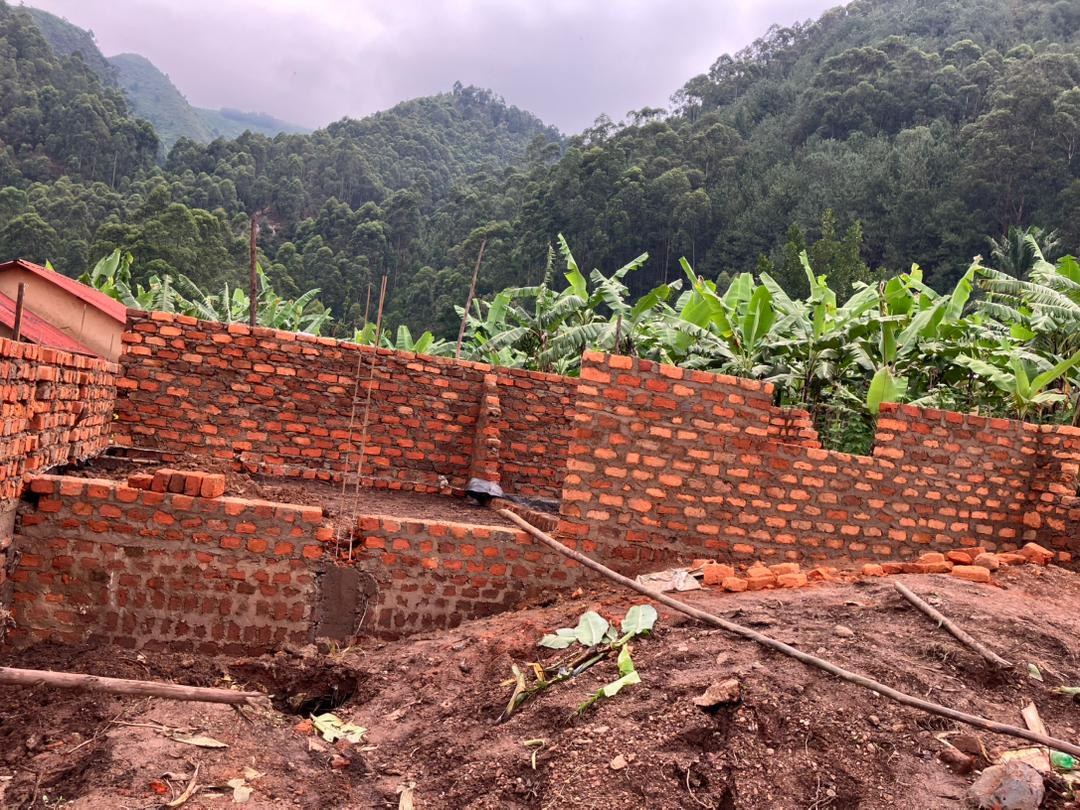
Across visits to Buhoma in January and May 2026, it was possible to watch the HopeKitchen building take shape from the ground up. In January, the foundations were being laid — hand-made bricks produced from local red clay, set in cement, rising course by course from the excavated ground. The scale of the finished building became apparent only gradually as the walls grew: larger than it looks in the early foundation photographs, with a footprint that will accommodate a communal eating and gathering area with a proper view across the Buhoma valley.
By May 2026, the roof structure was in place and the blue corrugated metal sheets were being fitted. The transition from open frame to weatherproofed structure is the moment when a construction project starts to look like the building it will become. The HopeKitchen sits on the hillside at -0.9621°N, 29.6106°E, looking out across the banana terraces and ridgelines that characterise the Bwindi landscape. From the unfinished window openings, the view encompasses most of the Buhoma valley.
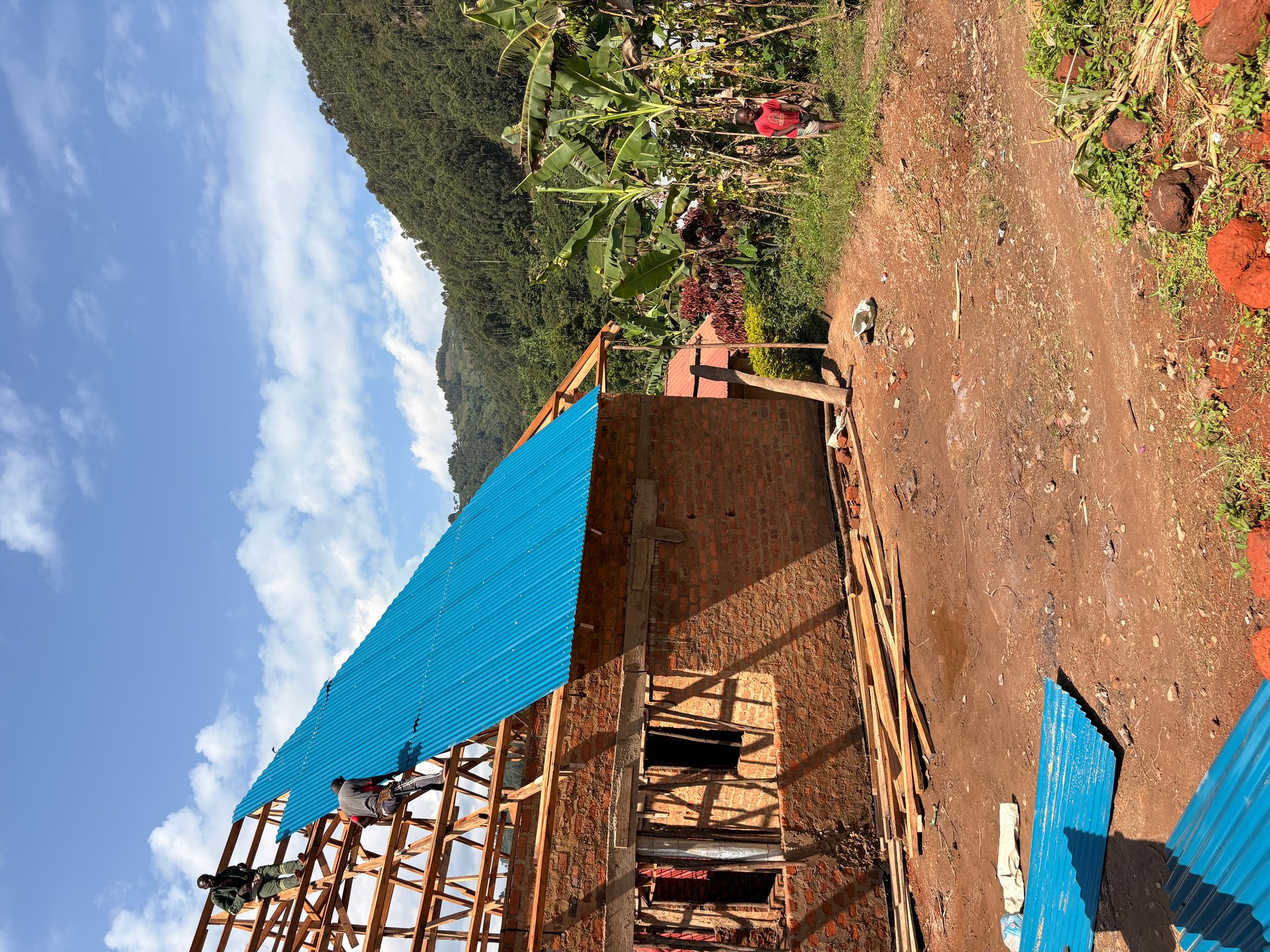
The HopeKitchen is a community project connected to the Hope on the Road initiative that has been active in Buhoma across multiple visits. It is one of several community-driven construction projects visible in Buhoma in 2026 alongside the planned tarmac resurfacing of the main street and ongoing improvements to the hospital compound founded by the German physician Dr Braun — the reception area of which, visited in January 2026, uses a repurposed shipping container as an extension building, a practical solution in a setting where materials and costs are constant constraints.
Emily Assimwe, a shop owner on Buhoma's main street, is one of the small business operators whose livelihood runs in parallel with the gorilla trekking economy. Her shop sits along the route that visitors and boda boda drivers travel between the park gate and the lodge cluster. In Buhoma, the boundary between the formal tourism sector and the informal economy of small traders, transporters, and service providers is permeable: the money that arrives with a gorilla trekking group distributes itself, over the course of a stay, across lodges, porters, guides, boda bodas, and the shops and food stalls that line the main street.
This is the full picture of Bwindi Impenetrable National Park in Uganda as a destination: a world-class wildlife conservation area whose management framework is also an economic development programme, a community infrastructure investment, and a platform for organisations like Ride 4 a Woman to build something beyond the gorilla trek itself. The teenagers posing in the orphanage courtyard, the Batwa man outside his house, the bricklayer setting the walls of the HopeKitchen — all of them are inside the same story. The gorillas in the forest are the reason the story exists.