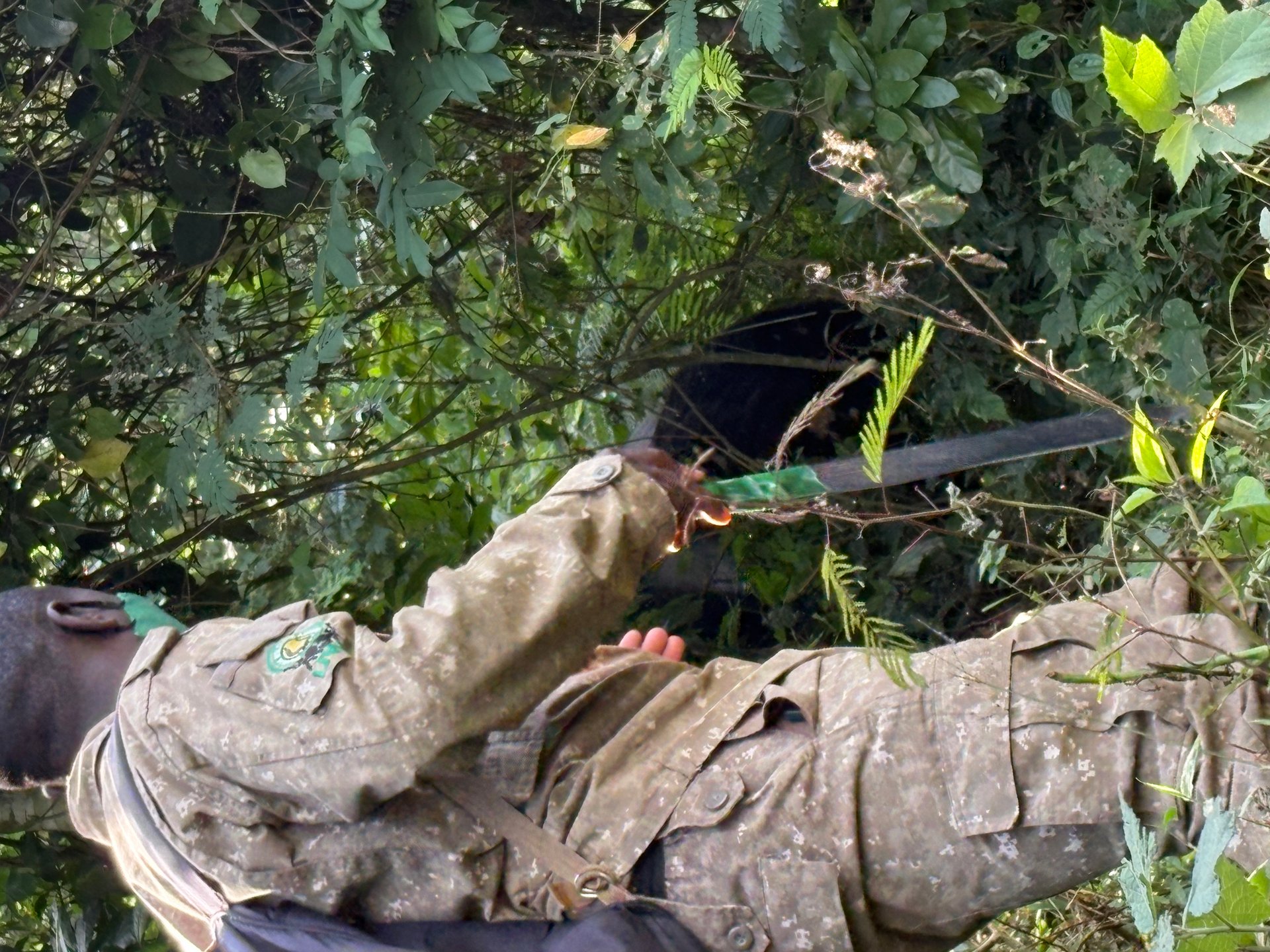
The first sign that the trek was about to succeed was the change in pace. Our lead ranger shortened his stride and moved off the trail into the undergrowth, machete drawn. During our gorilla trekking visits in January and June 2026 at Bwindi Impenetrable National Park, each group was accompanied by a guide and two rangers. The rangers were armed — a detail that looked unusual on first encounter and became completely unremarkable within the first few minutes. They were experienced, calm, and good company on a forest that is steep and genuinely demanding to move through. On the difficult sections, they helped with balance.
Bwindi gorillas are the reason the entire system exists: the rangers, the trails, the permits, the lodges, and the community of Buhoma. The 2018–2020 census recorded 459 mountain gorillas in Uganda — more than half the global total. The majority live in Bwindi Bwindi Impenetrable National Park in Uganda, with a smaller population at Mgahinga Gorilla National Park to the south.
Key Facts: Bwindi Gorillas
- Mountain gorillas in Uganda
- 459 individuals (2018–2020 census)
- Uganda's share of global total
- More than half
- Locations in Uganda
- Bwindi Impenetrable NP + Mgahinga Gorilla NP
- Habituated groups at Bwindi
- 14+ families available to visit (2026)
- Trekking sectors
- Buhoma, Ruhija, Rushaga, Nkuringo
- Gorilla permit (foreign non-resident)
- $800 per person (UWA, 2026)
- Gorilla Habituation Experience
- 4 hours; Rushaga sector; permit above $800 — verify with UWA
- Visitors per group per day
- Maximum 8 (standard trek)
- Time with a gorilla family
- 1 hour (standard); 4 hours (habituation experience)
- IUCN status
- Endangered (downlisted from Critically Endangered, 2018)
The Community That Makes Conservation Possible
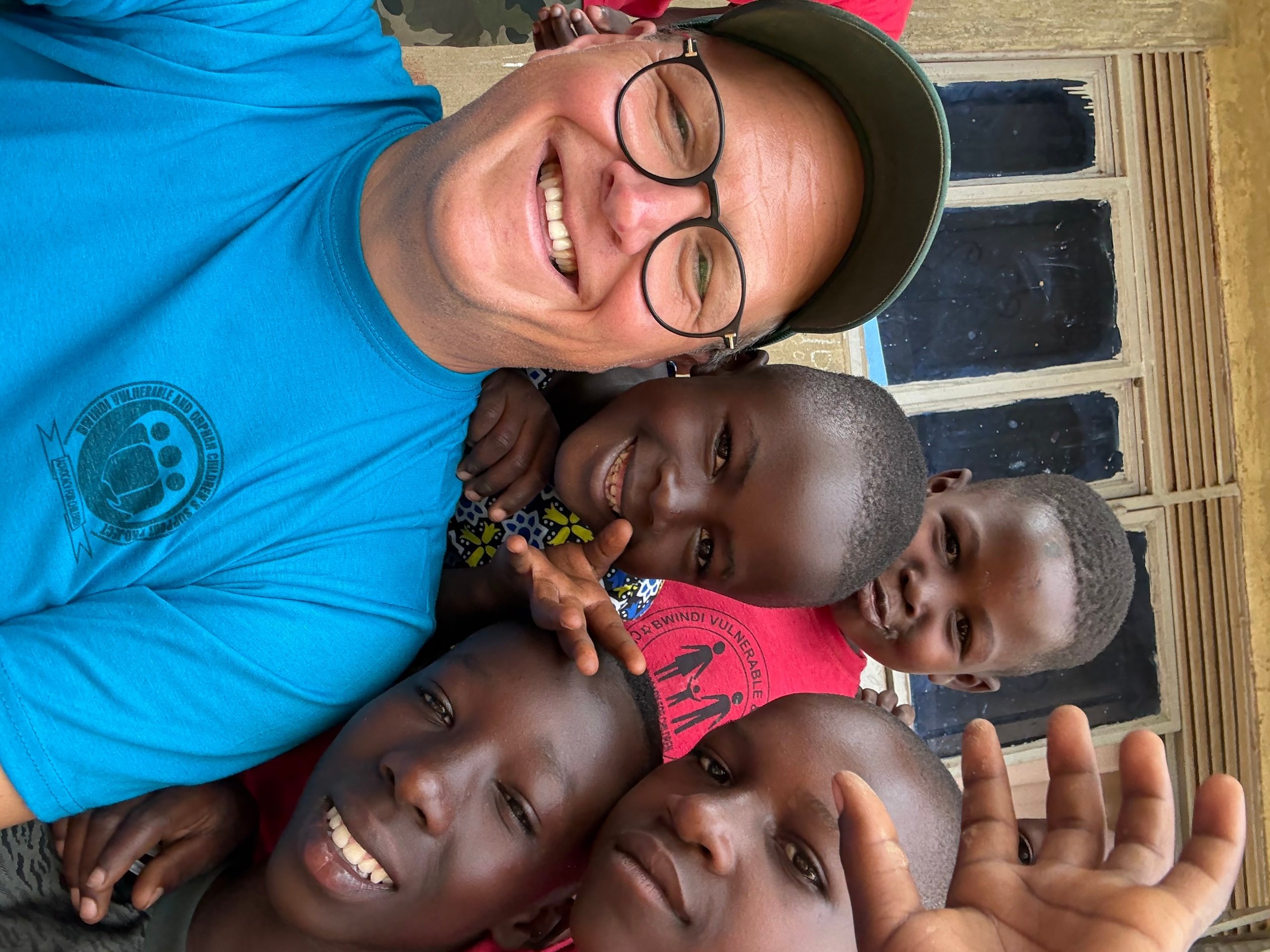
In January 2026, during a visit to the orphanage run by Nicholas — a pastor and community figure in Buhoma, the village that sits at the northern gateway of Bwindi — I spent time with the children who live there. They wanted to take photos and see themselves on the camera screen. There is no mirror in the orphanage, and the delight when the children caught their own reflection in the display was immediate and entirely unguarded. We made a group photograph on the sandy courtyard in front of the building. The happiness in that moment was one of the most straightforward things I encountered in Uganda.
Buhoma in the Kanungu District has developed into a functioning community — with a school, an orphanage, a community rest camp, craft cooperatives, and steady employment for rangers, guides, porters, and lodge staff — largely because mountain gorillas live in the forest behind it. The $800 permits that visitors pay to trek through that forest generate the revenue stream that funds Uganda Wildlife Authority (UWA) operations, which in turn funds a community revenue-sharing programme that returns a portion of park entry fees to households within the park boundary zone.
This connection — between the children in the orphanage, the community around Nicholas's church, and the gorilla families moving through the forest three kilometres away — is the economic and social logic that makes Bwindi's conservation sustainable. Protecting the gorillas is not in tension with the community's livelihood: in most respects, it is the source of it.
Mountain Gorillas: Biology, Behaviour, and Why Bwindi Is Their Stronghold
Mountain gorillas (Gorilla beringei beringei) are the largest living primates and exist in only two populations: the Virunga Massif (shared between Uganda, Rwanda, and the Democratic Republic of Congo) and Bwindi Impenetrable National Park. No mountain gorillas survive in captivity. The entire species lives wild.
Gorillas are social animals organised into family groups, typically led by a dominant silverback male. Families include multiple females, sub-adult males (blackbacks), juveniles, and infants. Communication within the group relies on a range of vocalisations — grunts, screams, and belch-like calls used in different contexts — as well as the well-known chest-beating display, which functions as a long-range signal and is audible across considerable distances in the forest. Silverbacks use it both to assert dominance within the family and as a response to perceived threats from outside.
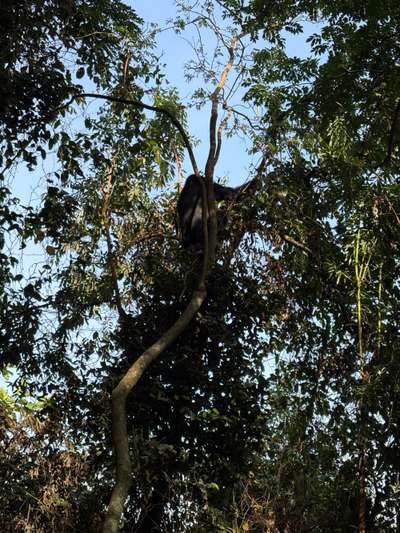
Mountain gorillas are primarily folivores, spending the majority of their waking hours feeding on leaves, stems, bark, and fruit. Their forest habitat provides the necessary forage density — a single adult male may consume up to 34 kilograms of vegetation per day. The Bwindi forest's exceptional age and altitude range support the complex, multi-layered vegetation structure that gorillas depend on. During our gorilla trek in June 2026, the first gorilla we encountered was feeding in a large tree near the canopy level — GPS confirmed at -0.9735°N, 29.6281°E — pulling leaves methodically. The image of a 180-kilogram primate eating with calm deliberateness sixty metres above the ground is difficult to convey in words.
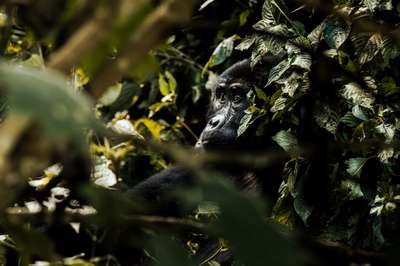
Bwindi is uniquely suited as gorilla habitat because of its combination of altitude range, forest age, and geographic isolation. The park sits between 1,160 and 2,607 metres above sea level, giving gorilla families access to different vegetation zones across a relatively small area — important both for dietary variety and for thermoregulation between seasons. The forest's isolation, while limiting genetic exchange with the Virunga population, has also meant that Bwindi's gorillas have developed as a distinct ecological population, closely adapted to this specific ecosystem.
The Habituated Gorilla Families of Bwindi
Habituation is the process by which a wild gorilla family is progressively accustomed to human presence, through daily contact over a period of typically two to four years. Habituation teams follow the target family from where it nested the previous night, maintaining consistent presence while gradually reducing the distance they keep. The process is complete when the family can be approached calmly to within seven metres — the minimum distance permitted during tourism visits, set to reduce the risk of disease transmission between humans and gorillas.
As of 2026, more than 14 gorilla families at Bwindi have been habituated for tourism, distributed across the four trekking sectors. At Buhoma in the north — the original gorilla tourism base, opened in 1993 — three families are available: the Mubare group (the first habituated for tourism in Uganda), the Habinyanja group, and the Rushegura group, which split from Habinyanja and is known for occasionally venturing close to the park boundary. At Ruhija in the north-east, gorilla families in the upper montane forest are accessible from the highest of the four sectors. At Rushaga in the south, the largest number of habituated families is concentrated, making it the sector with the most permit availability when peak-season demand exceeds Buhoma's allocation. At Nkuringo on the south-western ridge, the Nkuringo family group was among the first in the southern sector.
Each habituated family is monitored daily by UWA tracking teams, who locate the group each morning from the previous night's nest site and radio the position ahead to the trekking guide. This tracking infrastructure — funded directly by permit revenue — is what makes it possible to guarantee, with very high reliability, that trekking groups will find their assigned family. The success rate at Bwindi is consistently above 95 percent.
[QUOTE: local guide on the character of a specific gorilla family]
The Gorilla Habituation Experience
For visitors who want to go beyond the standard one-hour trek, Bwindi offers a distinct activity: the Gorilla Habituation Experience (GHE). Currently available from the Rushaga sector in the south of the park, the GHE involves joining the UWA habituation team as they carry out their daily work with a gorilla family that is still in the process of becoming fully accustomed to human presence. The visit lasts four hours rather than one, and the group size is smaller — typically no more than four visitors.
The difference in experience is significant. A standard trek reaches a family that is already habituated and calm — the encounter is stable, predictable at close range, and structured around visitor observation. The GHE places visitors alongside the process of habituation itself: the family may react to the team's presence, move unpredictably, and behave in ways that a fully habituated family would not. Habituation teams follow the family through difficult terrain, often starting before dawn. It is a more physically demanding and genuinely less comfortable experience — which is precisely why some visitors prefer it.
The GHE permit is priced significantly above the standard $800 trekking permit. Current rates are set by the Uganda Wildlife Authority and should be confirmed directly with UWA or a licensed operator at the time of booking. As with standard permits, GHE slots are limited and advance booking is required — the four-person maximum means availability is far more constrained than regular trekking.
Gorillas as Keystone Species: Why Conservation Tourism Works
Mountain gorillas are not merely an attraction — they function as a keystone species within Bwindi's forest ecosystem. A keystone species is one whose presence shapes the structure and health of the environment around it to a degree disproportionate to its numbers. Gorillas disperse seeds across large distances as they move through the forest, and their feeding patterns — breaking branches, clearing undergrowth, turning over soil — create light gaps and disturbance zones that allow understory plants to regenerate. Remove the gorillas and the forest composition shifts. Their presence is part of what makes the ecosystem function.
This ecological role is one reason why gorilla tourism, when properly managed, is a genuine conservation mechanism and not merely a revenue model. The permit fees that fund ranger salaries, veterinary monitoring, and anti-poaching operations also pay for the daily tracking work that keeps gorilla families located, monitored, and medically assessed. A family that is tracked every day is a family whose health problems are caught early. It is also a family that cannot disappear across the border into the DRC unnoticed.
Visitor behaviour is part of the same system. The seven-metre minimum distance rule exists because gorillas share approximately 98 percent of their DNA with humans and are susceptible to human respiratory diseases. The one-hour time limit reduces stress on the family. The group size cap of eight people limits cumulative disturbance across a day in which a family may also be visited by the tracking team and the habituation staff. Every rule enforced on a gorilla trek is a direct application of research on the long-term health outcomes of habituated families — not bureaucratic caution, but accumulated evidence.
Organisations including the African Wildlife Foundation operate in the Bwindi landscape on habitat connectivity and community livelihood projects. The Gorilla Conservation Coffee initiative supports smallholder coffee farmers near the park boundary as an alternative cash crop, directly reducing the economic pressure that drives encroachment at the forest edge. Lodge and tourism infrastructure operating near the park is subject to environmental compliance auditing under Uganda's National Environment (Audit) Regulations S.I. No. 47 of 2020, requiring environmental management plans to be submitted every three years. The regulatory framework around Bwindi is more detailed than most visitors realise — and more consequential for the gorillas than any single permit fee.
Conserving Bwindi's Gorillas: Forest Protection and the 2030 Goal
Mountain gorillas cannot survive without their forest. The relationship is not metaphorical: gorillas are entirely dependent on intact forest for food, shelter, and movement. Deforestation at Bwindi's boundary does not merely reduce habitat in the abstract — it directly fragments the range available to specific gorilla families, constrains their movement between altitude zones, and increases the frequency of human-gorilla contact at the forest edge.
Uganda's forest cover stood at 12 percent of total land area in 2021 — a significant reduction from historical levels driven by agricultural expansion, charcoal production, and illegal logging outside protected areas. A national conservation target aims to increase forest cover to 21 percent by 2030 through reforestation programmes and strengthened protection of existing forest reserves. Bwindi itself, as a national park, is the most strictly protected category of land in Uganda and is not subject to legal extraction. The challenge lies at the boundary.
Buffer zone management around Bwindi involves planting native trees on private land adjacent to the park, creating a graduated transition between agricultural land and the protected forest interior. The combination of habitat protection, community revenue sharing, and livelihood alternatives — employment in tourism, coffee farming, handicraft cooperatives — represents an attempt to make forest conservation economically rational for the households that live beside it.
Visiting the Bwindi Gorillas: What to Expect
A gorilla trek at Bwindi Impenetrable National Park begins at the sector headquarters at 7:00 AM with a briefing in which rangers assign your group to a specific gorilla family and provide a summary of the rules. Groups are a maximum of eight visitors, accompanied by a tracker guide and two rangers. On our treks in January and June 2026, the rangers were armed with rifles — a standard precaution that became entirely unremarkable within the first few minutes. Both pairs of rangers were experienced, calm, and genuinely helpful on terrain that is physically demanding: steep, wet, and frequently trackless.
The trek duration varies considerably — anywhere from under an hour to a full day, depending on where the gorilla family has moved overnight. In January 2026, we hiked for approximately one hour before encountering a gorilla family: the first individual was visible immediately, sitting in a tree and feeding on leaves. In October 2024, the same sector required a three-hour trek before the family was found. That group turned out to be entirely peaceful — we were able to get very close, and the gorillas paid us essentially no attention. Neither experience was predictable, and that unpredictability is part of what makes the encounter feel genuinely wild rather than staged.
The encounter itself lasts one hour from the moment the gorilla family is reached. The rules are firm: maintain a minimum of seven metres from any individual gorilla; no flash photography; no eating or drinking near the animals; turn away if you need to cough or sneeze. If you show any symptoms of respiratory illness on the morning of your trek, you will not be permitted to proceed — gorillas are susceptible to human respiratory diseases due to their genetic proximity to us, and this rule is enforced regardless of the cost of the permit.
The gorilla trekking permit costs $800 per person for foreign non-residents (UWA, 2026). Porter hire at the trailhead is approximately $15–20 and is strongly recommended given the terrain — both for practical comfort on steep, wet slopes and because the fee goes directly to local households around the park. Permits must be booked in advance through UWA or a licensed tour operator; peak season (June–September and December–February) can sell out six months or more ahead. Your permit specifies both the sector and the gorilla family you will trek to — confirm your accommodation is in the same sector as your permit before finalising your booking.